
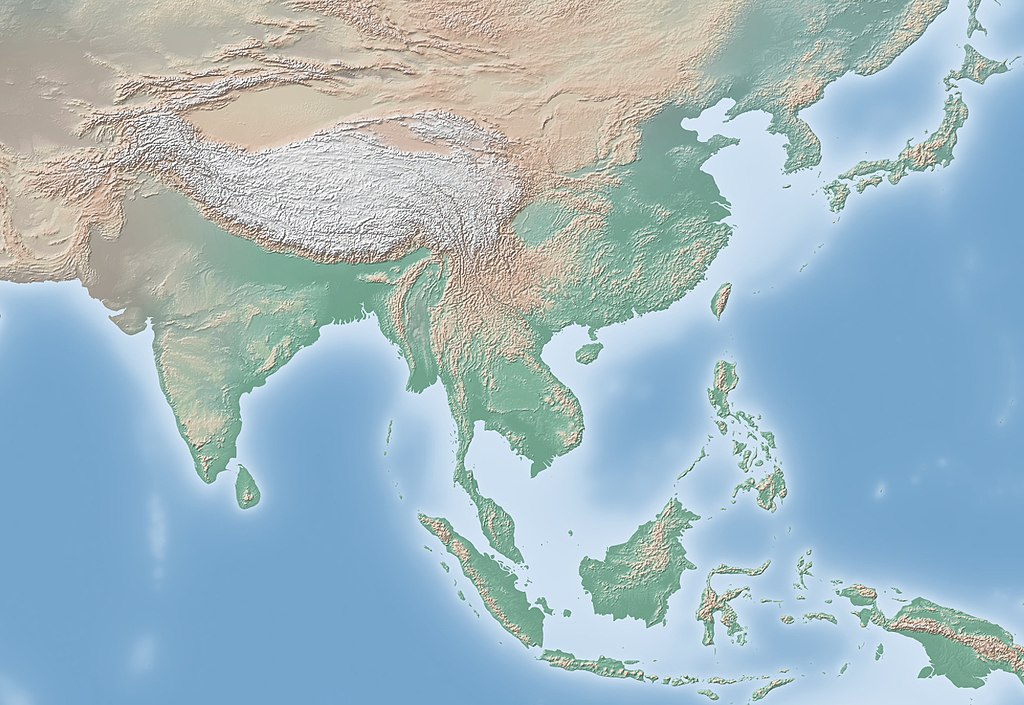
Developing Asia and the Pacific’s growth forecasts are cut to 4.7% in 2025 and 4.6% in 2026 from April. Front-loading of exports and solid domestic demand boosted growth in the first quarter of 2025, but a worsened external environment weighs on the region’s outlook.
The sharp depreciation of the United States (US) dollar in 2025 has raised questions about its underlying drivers. On one hand, it may signal an erosion of the US’s traditional safe-haven status. On the other, it could simply reflect shifting expectations about US monetary policy.
Taken together, the evidence suggests that, while the US’s safe-haven status may be weakening, monetary policy expectations have played an important role in shaping recent currency movements. Structural advantages — such as deep and liquid markets — continue to support the centrality of US assets in global portfolios, but recent developments highlight that this status is no longer unconditional.
Recent market developments have cast doubt on the continued status of the US as a global financial safe haven, however. A broad, trade-weighted measure of the US dollar depreciated more than 7% over the first 6 months of 2025, the most since the series began in 2006. At the same time, US government debt experienced a selloff following the reciprocal tariff announcement by the US administration on 2 April, which ushered in unprecedented trade-related policy uncertainty.
Caucasus and Central Asia
The subregional growth outlook for the Caucasus and Central Asia was revised upward to 5.5% for 2025 and 5.1% for 2026, from 5.4% and 5.0%, respectively. This reflects a stronger growth trajectory in Kazakhstan reinforced by stronger than expected government spending on capital investments and social services. The earlier launch of the Tengiz oil field expansion project, ahead of the previous ADO’s mid-year expectation, will also support mining output. On 31 May 2025, OPEC+ raised oil production for a third consecutive month, further bolstering growth prospects for Kazakhstan as it operates at maximum available capacity. The growth records of other countries remained in line with earlier ADO expectations.
The subregional inflation forecast for the Caucasus and Central Asia was adjusted upward to 7.8% for 2025 and 6.7% for 2026, from 6.9% and 5.9%, respectively. This is due to stronger inflationary pressures in Armenia, Kazakhstan, and Kyrgyz Republic. Armenia’s annual inflation rate rose to 3.0% for January-May 2025, compared to 0.8% in the same period last year. Despite a relatively tight monetary stance, Kazakhstan’s inflation rate reached 10.1% for the first five months of 2025, compared to 9.0% a year earlier, amid rising utility prices. Kyrgyz Republic’s inflation rate reached 8.0% in May 2025, largely due to its continued reliance on food and energy imports. In Tajikistan, consumer inflation remained muted at 0.1% in May 2025. Inflation in the other countries remained in line with earlier ADO forecasts. Azerbaijan’s inflation rate stood at 5.9% for January to May 2025, reflecting the lagged effects of administered price hikes in fuel and utilities. Georgia’s annual inflation amounted to 3.5% in May 2025. According to reports, Turkmenistan’s inflation is projected to be 6.0% for 2025, primarily due to extensive credit to state-owned enterprises and a 10.0% increase in public sector wages and pensions. Uzbekistan’s inflation rate reached a high of 10.3% in March 2025, prompting its central bank to hike interest rates, citing rising investment, energy tariff increases, and slower-than-expected disinflation.
East Asia
The 2025 growth outlook for East Asia has been revised downward to 4.3%, while the 2026 forecast remains unchanged at 4.0%. The downward revisions for the Republic of Korea and Hong Kong, China reflect the impact of US tariff hikes, which are expected to dampen trade activity. GDP projections for the PRC remain unchanged, supported by continued and strengthened policy measures.East Asia’s inflation forecast is adjusted down to 0.4% in 2025 and to 0.6% in 2026, from 0.6% and 0.9%. In the PRC, consumer prices deflated to 0.1% in the first 6 months of 2025 as food prices fell 0.9% despite a 4.0% rise in pork prices. Nonfood inflation rose 0.1%, driven by a 0.4% increase in services. Core inflation stayed low, at 0.5%, reflecting weak demand. With ample pork supply and rising competition among producers and retailers, inflation is expected to stay soft. Forecasts are lowered to 0.2% in 2025 and 0.4% in 2026. In Hong Kong, China, inflation forecasts are trimmed to 1.6% for 2025 and 2026. Headline inflation averaged 1.7% in the first 5 months and should remain low as weak domestic activity and subdued global demand limit price pressures. Inflation forecasts for other East Asian economies remain unchanged and on target.
South Asia
The growth outlook for South Asia for 2025 is 5.9%. The slight downward revisions for GDP growth in India and Sri Lanka in 2025 are primarily due to the effects of US tariff policies, while Bhutan’s downward revision reflects weaker-than-expected industry performance in the first quarter of 2025. The growth forecast for the subregion in 2026 is 6.2%.South Asia’s inflation is forecast at 4.4% in 2025, from 4.9% in the April 2025 ADO, and retained at 4.5% in 2026. India’s inflation forecast for FY2025 has been revised downward to 3.8%, reflecting faster-than-expected decline in food prices due to better agricultural production, while the FY2026 forecast remains unchanged. Likewise, Bangladesh’s actual inflation is marginally lower than forecast for FY2025 amid easing global commodity prices and tighter monetary and fiscal policies, while the outlook keeps the FY2026 forecast the same in anticipation of continued tight policies and moderating global oil prices. In Pakistan, the accelerated decline in food and nonfood prices for the first 11 months of FY2025 revised the inflation forecast for FY2025 downward, while the outlook for FY2026 remains unchanged.
Southeast Asia
Economic forecasts for Southeast Asia have been downgraded for 2025 and 2026 due to the continuing global growth slowdown, increased trade uncertainty. Weaker external conditions have hurt business and consumer sentiments and threaten to disrupt investment in the subregion. The subregion’s performance in the first quarter shows signs of slowing, particularly for those reliant on external demand, despite delays in implementing the US reciprocal tariffs and some frontloading of exports. Except for Indonesia, the largest economy in the subregion, all Southeast Asian economies are expected to post weaker growth in the next 2 years. Thus, growth forecasts for the subregion have been lowered from 4.7% to 4.2% in 2025 and from 4.7% to 4.3% in 2026.Average inflation in Southeast Asia as of July is below earlier forecasts for 2025 and 2026. Most economies saw inflation ease below central bank targets in the first 5 months of 2025, due to lower energy and food prices, subdued consumer demand, and stronger regional currencies.
The Pacific
Growth projections for the Pacific are maintained at 3.9% in 2025 and adjusted downward to 3.5% in 2026. The economic outlook for the subregion is predominantly determined by Papua New Guinea and Fiji, the two largest economies. Growth projections for these two countries remain unchanged. Overall, the subregion’s growth is moderating as it continues to face challenges, such as capacity constraints, in expanding tourism and implementing public infrastructure projects, such as capacity constraints, vulnerability to disasters and external shocks, limited fiscal space, and an elevated risk of debt distress.Inflation in the Pacific is still forecast to be 3.4% in 2025 and 3.7% in 2026. The outlook is driven by international commodity price trends. The subregional averages mask adjustments in smaller Pacific economies. In FY2025, inflation is estimated to be lower than initially forecast in Samoa and higher in the Marshall Islands and Palau, based on observed domestic price movements. For FY2026, higher inflation is projected in Palau and lower inflation in the Marshall Islands and Samoa. More volatile international commodity prices, particularly for fuel, and supply chain disruptions—including those that might arise from geopolitical tensions—pose significant risks to the outlook.